
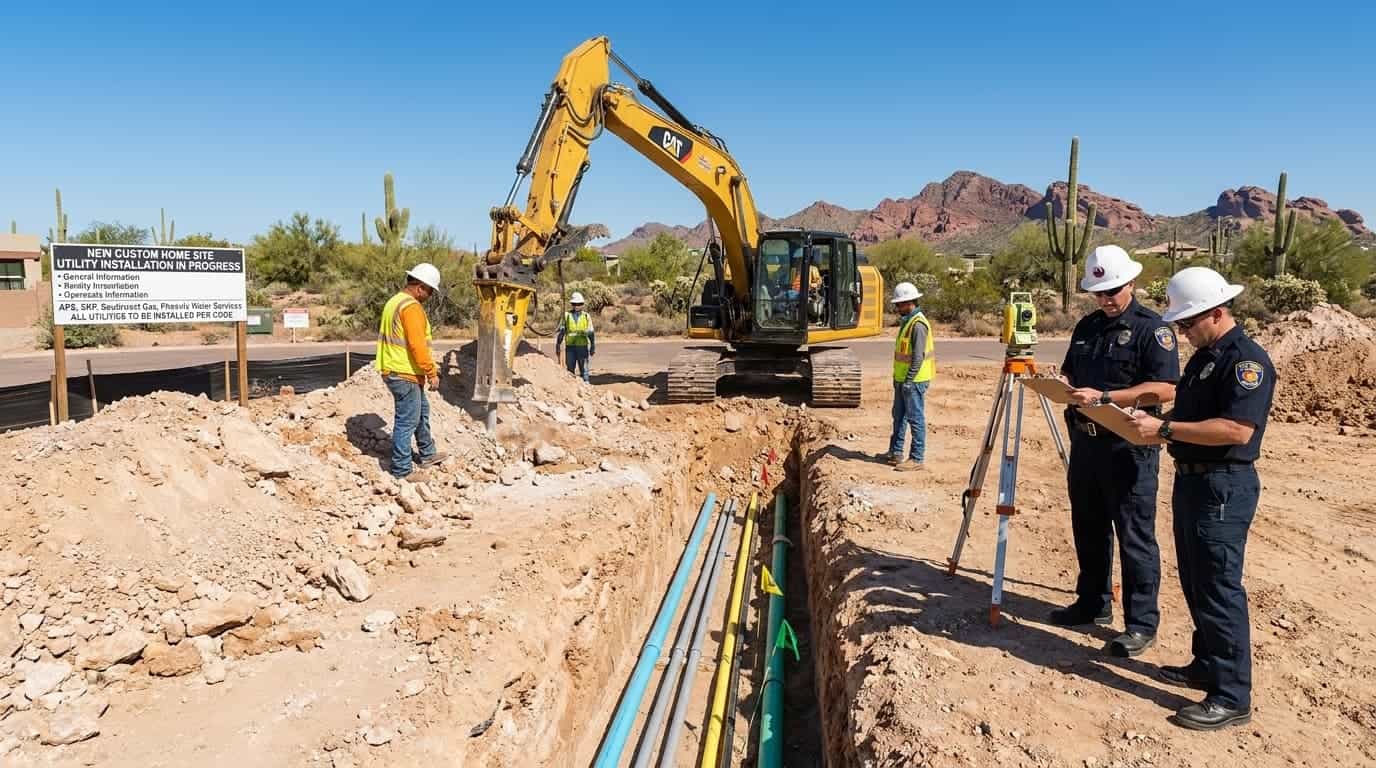
Building a custom house from the ground up is an exciting journey, but dealing with the technical details of the site can quickly become overwhelming. When it comes to utility hookups new construction projects require meticulous planning, precise execution, and a deep understanding of local municipal codes. Connecting utilities new home builders face involves far more than simply flipping a switch or turning a valve. From trenching through tough desert soil to coordinating with multiple city agencies, every step must be handled correctly to avoid expensive delays. In Phoenix, AZ, partnering with an experienced general contractor like Prolific Builders ensures that your water, sewer, gas, and electric lines are installed safely, efficiently, and strictly up to code.
What Are Utility Hookups and Why They Matter for New Construction in Phoenix
Before the framing goes up or the foundation is poured, your property needs to be prepared to sustain daily living. Utility hookups refer to the physical lines and systems that connect your private residence to the main public infrastructure. In the Phoenix metropolitan area, this process presents unique regional challenges. Our notoriously hard desert soil, known as caliche, makes excavation difficult. Furthermore, code compliance in Maricopa County is strict, and failing to meet exact standards can halt your building progress for weeks.
When you are preparing a site, you are not just laying pipes. You are navigating a complex web of Phoenix-specific providers, including SRP for water and power, APS for electric, Southwest Gas, and the local city sewer departments. Attempting this as a DIY project, or hiring inexperienced subcontractors, comes with massive risks, including heavy fines and compromised structural integrity.
To fully understand the scope of the work, here are the core components of residential utility connections:
- Water Lines: Connecting the municipal water main to your property meter, ensuring proper pressure and backflow prevention.
- Sewer Connections: Installing a lateral line that carries waste from your home to the city sewer system, which often requires precise grading.
- Electrical Service: Trenching and laying conduits to bring high-voltage power from street transformers to your main breaker panel.
- Gas Piping: Safely routing natural gas lines from the street to your property for heating, cooking, and hot water systems.
Phoenix-Specific Utility Providers for New Builds
Connecting utilities to your new home requires working with specific regional authorities. Depending on your exact lot location in the Valley, your provider will vary. Navigating the paperwork and requirements for each of these entities can be exhausting, but as a full-service general contractor, Prolific Builders partners directly with these organizations to ensure a seamless transition from vacant lot to a fully powered home.
Below is a breakdown of the primary utility providers you will encounter during a Phoenix new construction project:
| Utility Type | Primary Provider | Service Area Focus | New Construction Requirements |
|---|---|---|---|
| Electric | APS (Arizona Public Service) | Large portions of Phoenix and surrounding suburbs | Requires approved meter load sheets, conduit inspections, and designated trench depths. |
| Electric & Water | SRP (Salt River Project) | Specific central and eastern Phoenix metro zones | Strict site plan approvals, specific transformer clearances, and early application submissions. |
| Natural Gas | Southwest Gas | Entire Phoenix Metropolitan Area | Mandatory pressure testing, specific sleeve requirements for underground lines, and final inspections before the meter is set. |
| Water & Sewer | Phoenix Water Services | City of Phoenix limits | Requires tap permits, right-of-way permits for street access, and rigorous compaction testing after backfilling. |
Step-by-Step Process for Connecting Utilities in New Phoenix Homes
Understanding how to connect utilities requires looking at the project through a strict timeline. When managing connecting utilities new home projects, we follow a rigorous, proven methodology. Prolific Builders handles this entire sequence, managing the permitting and excavation so you do not have to stress about the details.
1. Site Plan Submission to Providers
The process begins months before breaking ground. Detailed site plans must be submitted to APS, SRP, and the city. These plans show exactly where the home will sit on the lot, where the city mains are located, and the proposed path for all lateral lines.
2. Permits from the City of Phoenix
Before a single shovel hits the dirt, we secure all necessary right-of-way and trenching permits. The city must approve the plans to ensure we are not disrupting existing public infrastructure.
3. Excavation and Trenching
This is where the heavy machinery comes in. We dig the trenches according to strict depth and separation codes. In Phoenix, dealing with hard caliche soil often requires specialized rock-breaking equipment.
4. Lateral Line Installations
Once the trenches are prepared, our specialized subcontractors install the physical lines. This includes laying PVC for water and sewer, setting conduits for electrical wires, and placing safe, durable piping for natural gas.
5. Inspections and Meter Sets
Before any trenches are buried, the city and utility inspectors must visually verify the work. Once the open trench inspection is passed, the utility companies will set the physical meters on the property.
6. Final Connections and Testing
With the meters in place, lines are flushed, pressure-tested, and officially tied into the home’s interior plumbing and electrical panels.
7. Billing Setup
At this stage, the accounts are transitioned from the builder’s temporary construction accounts to the permanent homeowner accounts.
8. City Clearance and Backfilling
Once everything is tested and approved, the trenches are safely backfilled, the soil is compacted to prevent future sinkholes, and the city grants final clearance for the utility portion of the build.
Water and Sewer Hookups in Phoenix New Construction
Handling the wet utilities, specifically water and sewer, requires immense precision. If a sewer line does not have the correct downward slope, you will face chronic plumbing backups. In Phoenix, tying into the city mains usually involves cutting into the street asphalt, which requires special traffic control permits and right-of-way permissions.
The Water Connection Process
Getting clean water to your home involves tapping into the SRP or city water main. This process requires installing a dedicated water meter, running the lateral line to the house, and setting up backflow prevention devices. Backflow preventers are critical, as they stop contaminated water from flowing backward into the city supply.
Setting Up Your Sewer Tap
Sewer hookups are heavily scrutinized by the city. We must calculate the exact slope required for gravity to carry waste to the municipal main. If your lot sits lower than the city sewer line, Prolific Builders will install and configure a heavy-duty sewage ejector pump system. Additionally, once the pipes are laid, the desert dirt used to fill the trench must undergo strict soil compaction testing to ensure the ground will not settle and crack your driveway later on.
| 2026 Phoenix Permitting Checklist: Water & Sewer | Expected Timeline | Common Roadblocks |
|---|---|---|
| Civil Engineering Site Plan Approval | 3 to 5 Weeks | Incorrect pipe sizing on drawings. |
| Right-of-Way / Street Cut Permits | 2 to 4 Weeks | Traffic control plan rejections. |
| Sewer Tap Permit & Inspection | 1 to 2 Weeks | Failing to meet strict slope grading codes. |
| Soil Compaction Testing | 3 to 5 Days | Failing density tests due to dry, rocky dirt. |
Gas and Electric Connections for New Phoenix Homes
Dry utilities, which encompass your gas and electric connections, have their own set of stringent rules. Prolific Builders handles all dry utility trenching, ensuring your home has the power it needs to run modern HVAC systems, high-end appliances, and smart home technology.
Establishing Electric Service
Depending on your address, you will work with either APS or SRP. Both providers require specific conduit sizes and trench depths. We coordinate the meter load sheets, which tell the power company exactly how much electricity your home will draw. This ensures they install the correct size transformer and cables.
Navigating Gas Line Installations
Southwest Gas provides natural gas to the Phoenix area. Their lines must be run safely, often requiring specialized yellow tracer wire so future excavators can locate the pipe underground. Gas lines must pass a rigorous pressure test to prove there are absolutely zero leaks before the meter is unlocked.
2026 Cost Guide: Utility Hookups in Phoenix New Construction
One of the most common questions we receive is about the financial aspect of the build. Budgeting for utilities can be tricky because no two lots are identical. Factors that influence your final price include the distance from the street to your house, the depth of the city mains, and how much caliche rock we have to break through during excavation.
To give you a clear picture of what to expect, we have compiled an exclusive 2026 estimator for standard residential lots in the Phoenix metro area. Keep in mind that inflation, fluctuating material costs, and municipal fee updates can affect these ranges.
| Utility Hookup Type | Estimated 2026 Cost Range | Primary Cost Factors |
|---|---|---|
| Water and Sewer | $5,000 to $15,000 | Street cutting fees, traffic control, distance to the main, and ejector pump requirements. |
| Electric Connections | $4,000 to $12,000 | Panel amperage size, length of the underground conduit run, and transformer upgrades. |
| Natural Gas | $3,000 to $8,000 | Trenching distance, pipe materials, and the number of gas appliances in the home. |
With Prolific Builders, these variables are carefully calculated upfront. We position our fixed-price new home packages to give you total transparency, so you are never surprised by hidden trenching fees.
Common Pitfalls and Troubleshooting for Phoenix Utility Hookups
Even with the best plans, underground construction is unpredictable. After more than 30 years in the business, the team at Prolific Builders has seen it all, and more importantly, we know exactly how to fix it. Here is a unique resource highlighting common problems encountered in Phoenix and how they are resolved.
| Common Issue | The Fix | Who is Involved |
|---|---|---|
| Hitting Caliche Rock | Deploying specialized rock-trenching attachments to safely break the hardpan without delaying the schedule. | Excavation Contractor, General Builder |
| Failed Open Trench Inspection | Adjusting the pipe grading or adding proper shading material around the conduits to meet inspector requirements. | City of Phoenix Inspectors, Builders |
| Utility Line Conflicts | Redesigning the trench path on the fly if an unmarked, abandoned line is discovered underground. | Civil Engineer, Blue Stake (Arizona 811) |
| Meter Set Delays | Proactive communication and escalating work orders with the utility provider’s new construction department. | APS (602-371-7171) or SRP Representatives |
Why Choose Prolific Builders for Your Phoenix New Home Utility Hookups
Bringing a vacant piece of land to life takes relentless coordination. When evaluating who should manage your project, you need a team with deep local expertise. Prolific Builders offers full-service general contracting, meaning we do not just build the walls, we expertly manage the groundwork that makes your home functional.
Our comprehensive knowledge of Phoenix building codes guarantees that your hookups are compliant, safe, and delivered on time. We have spent decades building a network of top-tier plumbing, electrical, and excavation subcontractors. By choosing a unified team, you bypass the headache of acting as the middleman between the city, the utility providers, and the trenching crew.
Have questions about evaluating your lot, or want to discuss the groundwork for your upcoming custom home? Give our team a call today to schedule a comprehensive site evaluation.
Frequently Asked Questions
How long does it take to connect utilities to a new home in Phoenix?
The physical trenching and installation can usually be completed in one to two weeks. However, the administrative phase, including drafting site plans, securing city permits, and waiting for provider approvals, can take anywhere from 6 to 12 weeks. Starting the paperwork early is crucial to keeping the build on schedule.
Who is responsible for utility trenching?
While the municipal providers (like APS or Phoenix Water) maintain the main lines in the street, the homeowner is responsible for the trenching and lateral lines on their private property. When you hire Prolific Builders, our excavation team manages this entire process on your behalf.
Can I run water and sewer lines in the same trench?
Typically, no. Municipal building codes require strict horizontal and vertical separation between potable water lines and sewer lines to prevent any chance of contamination. Electric and gas lines also have their own specific separation requirements, which is why a well-designed trenching plan is absolutely mandatory.