Building a custom home in the desert is a dream for many, but ensuring that home serves you for decades requires forward thinking. When planning a new construction project, incorporating aging in place design from day one is the smartest investment you can make. By integrating seamless aging in place features before the foundation is even poured, you create a luxurious, future-proof sanctuary that adapts to your changing needs. Unlike retrofitting an older property, designing your forever home from the ground up allows for invisible, stylish integrations that enhance both your daily life and your property’s long-term value.
What Is Aging-in-Place Design, and Why It Matters for New Homes in Phoenix?
Aging-in-place home design means creating a living space that safely and comfortably accommodates you through all stages of life, regardless of changes in mobility or physical ability. When designed intentionally, these elements blend perfectly into the architecture of a luxury home. Key elements of this approach include:
- Eliminating unnecessary steps and trip hazards throughout the property.
- Widening doorways and hallways for effortless navigation and future mobility aids.
- Installing smart home technologies and adaptable, layered lighting.
- Structurally reinforcing walls and framing for future support systems.
There is a massive difference between designing aging in place features into a new build versus retrofitting an existing home. Remodeling a standard house to accommodate mobility needs often involves tearing down walls, ripping up plumbing, and compromising on aesthetics. When you design these elements from the ground up with Prolific Builders, the features are engineered into the bones of the house. This proactive approach saves tens of thousands of dollars in future remodeling costs while drastically improving safety, independence, and overall comfort.
For Phoenix residents, this localized approach to design is especially critical. Building a home that supports you long-term means you can stay comfortably rooted in your community, close to family, and near your preferred medical services. It prevents the physical and emotional exhaustion of forced relocations later in life.
Core Aging-in-Place Design Principles for Your New Phoenix Home
The foundation of a forever home relies on universal design principles, which prioritize spaces that are inherently accessible to everyone. In practical terms, this means designing a floor plan that minimizes stairs and level changes. It requires wide, clear pathways that allow multiple people, or those using mobility aids, to move freely without feeling cramped.
Visibility and usability are also paramount. Good lighting is layered and eliminates harsh shadows, while controls for plumbing, lighting, and HVAC are placed at easily reachable heights. The most important principle, however, is that an accessible home should never look institutional. Modern universal design in new homes utilizes luxurious materials, sleek hardware, and beautiful architectural lines to create spaces that are as stylish as they are functional.
Phoenix-Specific Considerations for Aging-in-Place New Builds
Building in the Sonoran Desert introduces unique environmental factors that must be addressed during the architectural phase. The Phoenix climate dictates how a home should be positioned and protected to ensure long-term comfort and safety.
Heat and sun exposure are primary concerns. Proper site orientation, deep shaded overhangs, reflective roof colors, and high-performance low-E windows are critical to maintaining a consistent, comfortable indoor temperature without overtaxing your HVAC system. Additionally, the Arizona monsoon season requires strategic site grading and drainage solutions to prevent water pooling at entryways. Outdoor surfaces, particularly on patios and walkways, must utilize slip-resistant materials that remain safe when wet.
Dust and indoor air quality are also significant factors in desert living. A tightly sealed building envelope, paired with whole-home filtration systems, minimizes indoor dust accumulation. This reduces the physical strain of frequent deep cleaning and protects respiratory health. When selecting a lot, Prolific Builders helps clients identify properties with minimal slope to reduce the need for exterior steps, while also considering proximity to healthcare facilities, grocery stores, and quiet, walkable neighborhoods.
Floor Plan Strategies for a Forever Home
The layout of your home dictates how easily you can navigate it as you age. Single-level living is the gold standard for an aging in place floor plan. However, if lot size restrictions require a two-story design, the primary suite, kitchen, laundry room, and main living areas must all be located on the first floor.
Open layouts with clear circulation spaces are essential. We recommend a minimum of 42 to 48 inches for hallways and pathways to ensure comfortable turning radiuses. By minimizing the use of long, narrow hallways, you can create direct, intuitive connections between key spaces, such as linking the primary bedroom directly to the bathroom, closet, and laundry area.
Incorporating flex rooms is another brilliant strategy for long-term livability. A main-level office or guest room can easily be transitioned into a dedicated caregiver’s suite or accessible secondary bedroom in the future if needs change.
Entry, Garage, and Outdoor Access
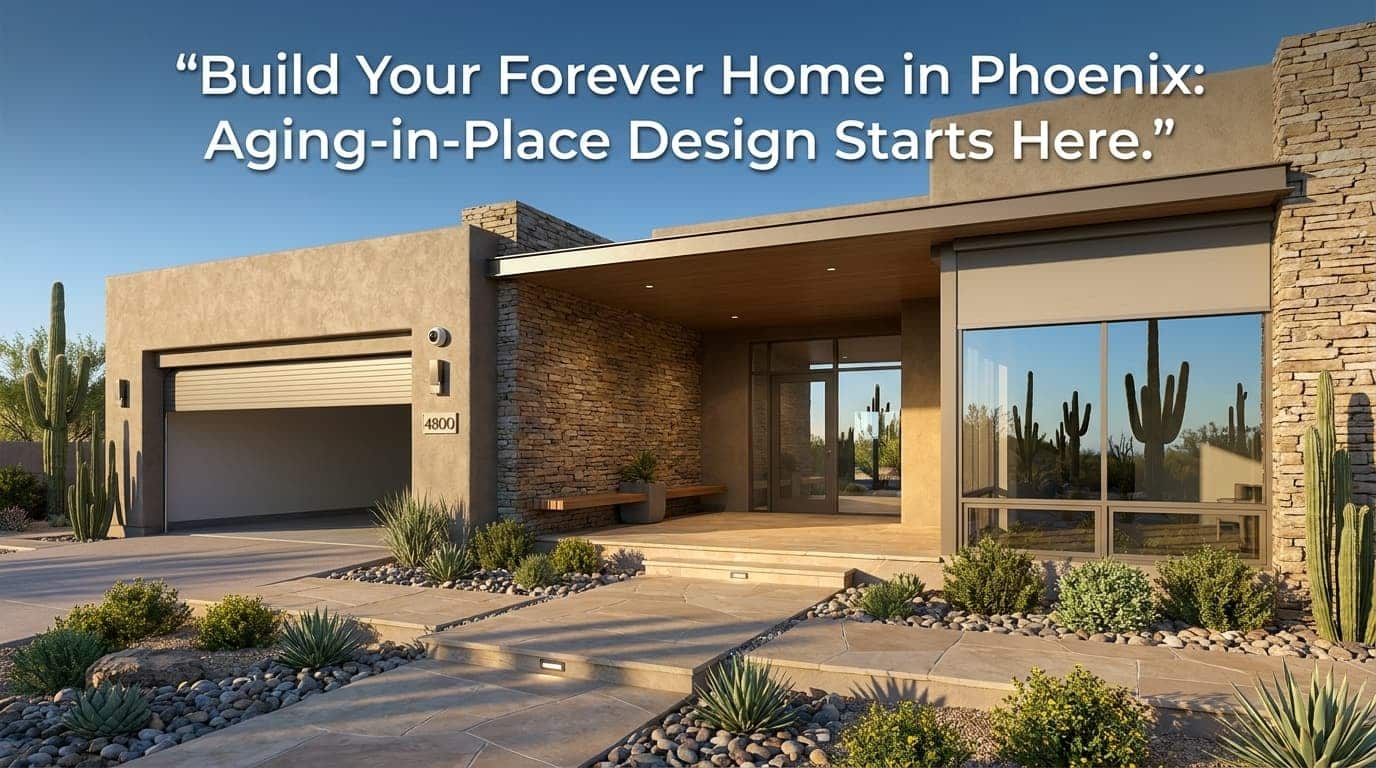
The transition from the outside world into your home should be effortless. A zero-step, or zero-threshold, entry from the driveway, sidewalk, or garage is a cornerstone of accessible home design. Covered entries are vital in Phoenix to provide protection from the intense sun and sudden rain, and incorporating built-in seating or a landing space makes waiting or handling keys much easier.
Interior and exterior doors should be at least 36 inches wide and feature lever-style handles, which are far easier to operate than traditional knobs for hands with arthritis. In the garage, designing for extra width is crucial. A wider garage allows car doors to open fully, providing the necessary space to maneuver a wheelchair or walker comfortably. Similarly, outdoor patios should feature minimal level changes and abundant shade structures to make outdoor desert living safe and enjoyable year-round.
Kitchen Aging-in-Place Features That Don’t Sacrifice Style
The kitchen is the heart of the home, and designing it for longevity requires balancing aesthetics with ergonomics. The layout must prioritize clear work triangles with ample circulation space. Multi-height countertops are an excellent feature, providing designated prep areas for both standing and seated use.
Cabinetry design plays a massive role in usability. Incorporating pull-out shelves, deep drawers in base cabinets, and D-shaped pulls prevents the need to bend, stretch, or dig for heavy pots and pans. Appliances should also be selected and placed with care. Wall ovens mounted at a comfortable height eliminate the need to bend over a hot door. Induction cooktops offer a safer cooking experience, as the surface cools instantly and features auto-shutoff capabilities. Finally, robust task lighting and under-cabinet illumination ensure prep areas are bright, safe, and easy on the eyes.
Whole-Home Systems for Long-Term Comfort and Health
An often overlooked aspect of aging in place design is the integration of invisible whole-home systems. True comfort requires advanced HVAC zoning, allowing different areas of the home to maintain precise temperatures based on the occupant’s needs. High-quality indoor air quality systems ensure the air you breathe is free of desert dust and allergens.
Smart home integration is no longer just a luxury, it is a vital accessibility tool. Voice-activated lighting, automated window shades, and smart thermostats allow you to control your environment without physical exertion. For ultimate peace of mind, wiring your new build for a backup power generator ensures that medical equipment, refrigeration, and cooling systems remain operational during unpredictable power outages.
The Prolific Builders Aging-in-Place New Build Process
Creating a customized forever home requires a dedicated, systematic approach. At Prolific Builders, our process ensures that every detail of your future needs is accounted for without compromising your architectural vision.
First, we conduct a deep assessment to understand your lifestyle, aesthetic preferences, and long-term goals. During the design development phase, our team collaborates with architects to optimize the floor plan, ensuring wide corridors, zero-step entries, and strategic site orientation are baked into the blueprints.
Next comes the selections phase, where we guide you through choosing high-end finishes that are both beautiful and functional, such as slip-resistant luxury flooring and ergonomic plumbing fixtures. Finally, during construction, our expert project managers oversee the rigorous execution of these specialized features, ensuring everything from structural blocking to custom cabinetry meets our exacting standards.
Phase-Friendly Planning: Designing Now for Future Needs
You may not need grab bars, an elevator, or medical equipment today, and you certainly don’t have to install them right now. However, preparing the structure of your new home to accept these features later is called phase-friendly planning, and it is a financial lifesaver.
During the framing stage, we can install heavy-duty wood blocking inside the bathroom walls. If you ever need to mount grab bars or shower seats, the structural support is already hidden behind the drywall, saving you from a messy and expensive tear-out. If building a two-story home, we can design stacked closets that serve as standard storage today but can easily be converted into an elevator shaft tomorrow. Running extra electrical conduit and capacity to the primary bedroom allows for the seamless future addition of adjustable beds or specialized medical monitors.
Phoenix Cost and Value Snapshot
Integrating aging in place features during the initial design phase of a new custom home is significantly more cost-effective than remodeling an existing property. While exact pricing depends on the size and luxury level of your home, the value engineering provided by Prolific Builders ensures your budget is maximized for long-term ROI. Below is a snapshot demonstrating the stark contrast in costs between proactive building and reactive remodeling.
| Feature | Cost to Integrate in New Build | Estimated Cost to Retrofit Later |
|---|---|---|
| Zero-Step Entry / Flat Thresholds | Minimal (Planned grading) | High (Concrete cutting, structural changes) |
| Wider Doorways & Hallways | Negligible (Material differences only) | Very High (Moving walls, electrical, flooring) |
| In-Wall Blocking for Grab Bars | Very Low (A few pieces of lumber) | High (Tearing out tile, drywall repair) |
| Stacked Closets (Future Elevator) | Low (Architectural planning) | Extreme (Cutting through floor joists, roofing) |
By making these decisions early, you not only protect your future mobility but also greatly enhance the resale value of your home. A beautifully designed, accessible home is highly sought after in the Phoenix real estate market.
Ready to start planning your custom forever home in Phoenix? Our team at Prolific Builders is here to help you integrate beautiful, functional design from the ground up, ensuring your home is a perfect fit for today and tomorrow. Have questions? Give us a call.
Frequently Asked Questions
What is the most important aging-in-place feature for a new home?
The most critical feature is achieving single-level living with a zero-step entry. Eliminating stairs and threshold barriers prevents the most common causes of falls and ensures the home remains fully accessible regardless of mobility changes.
Does universal design decrease the resale value of my home?
Absolutely not. When executed properly by a luxury custom home builder, universal design features like wide hallways, open floor plans, and curbless showers are seen as highly desirable, premium upgrades. They increase your buyer pool and often boost overall resale value.
How do I make my bathroom safer without making it look like a hospital?
You can achieve a spa-like aesthetic while prioritizing safety by installing a curbless walk-in shower with a linear drain, using matte, slip-resistant floor tiles, and choosing stylish designer grab bars that double as towel racks. Proper lighting and a floating vanity also enhance both safety and modern design.
Can I add an elevator to a two-story home later?
Yes, but it is vastly cheaper if you plan for it during the new build. By designing stacked closets with temporary flooring between them, and ensuring the structural framing and electrical requirements are already in place, adding an elevator in the future becomes a simple, cost-effective modification rather than a major demolition project.