
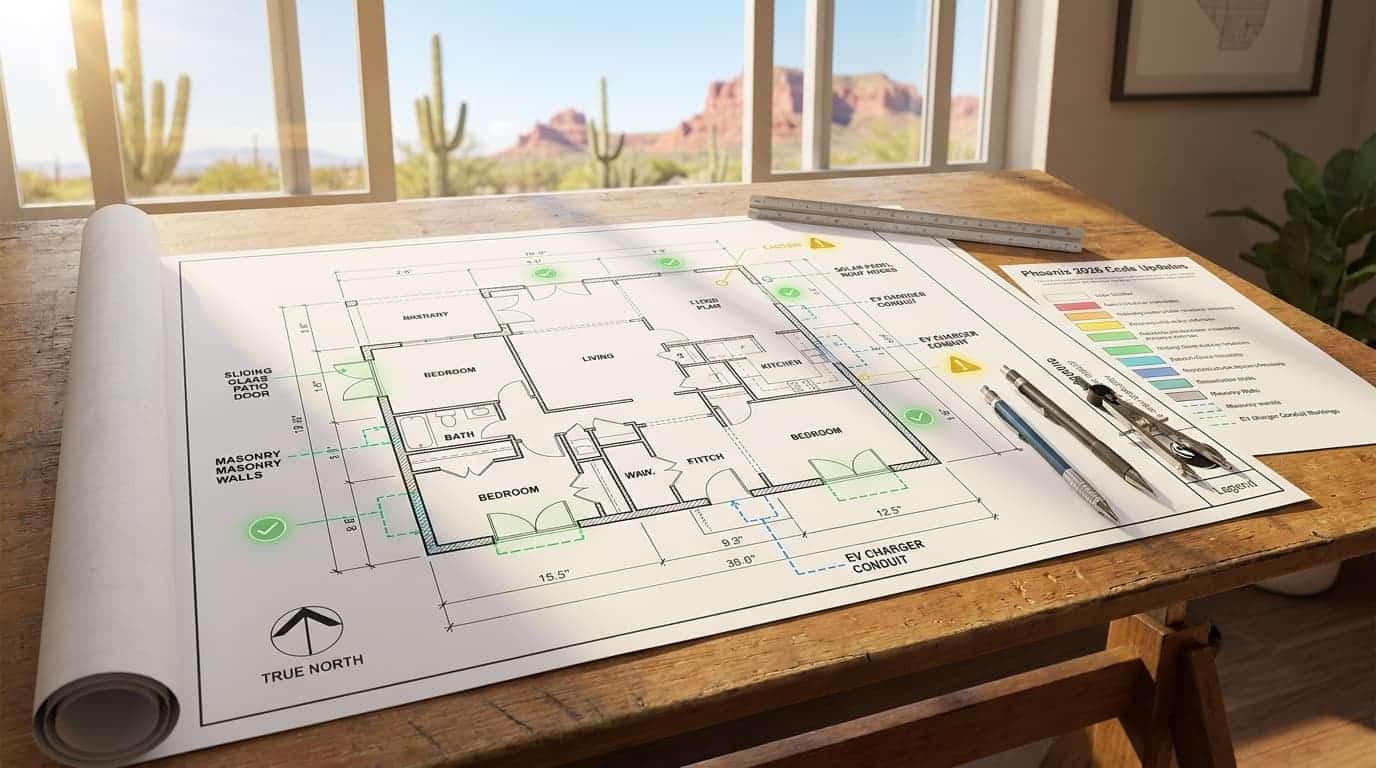
Welcome to your ultimate blueprint symbols guide. Whether you are breaking ground on a custom desert oasis or remodeling a historic property, reading construction drawings is a vital skill. Translating lines and shapes into real-world structures might seem intimidating, but understanding this visual language can save you thousands of dollars and endless frustration. In this comprehensive guide, we will break down everything you need to know about navigating your residential plans, specifically tailored for the unique building landscape of Maricopa County.
Why Phoenix Homeowners Need to Master Blueprint Symbols
Blueprints are the foundational language of the construction industry. When you are undertaking a build or major remodel, these documents dictate every detail of your future home. Failing to understand them carries significant risks, ranging from costly mid-project change orders to severe local code violations. In Arizona, local reports indicate that nearly 15% of residential construction errors stem from homeowners and contractors misreading plan specifications.
Phoenix has specific environmental and regulatory demands that make accurate blueprint reading even more critical. The 2026 International Building Code (IBC) amendments for our region include strict mandates for fire-rated walls, designated flood zone elevations, and specialized energy-efficient windows designed to combat extreme summer heat. Misinterpreting the symbol for a standard window instead of a low-emissivity, impact-rated desert window could lead to a failed inspection or soaring energy bills.
If you feel overwhelmed by your project documents, the experts at Prolific Builders offer a specialized blueprint review service for Phoenix homeowners. We sit down with you, translate the technical jargon, and ensure your plans perfectly align with your vision and local regulations.
Blueprint Basics, How to Read Construction Drawings in Phoenix
Before diving into individual symbols, you need to understand how a blueprint is structured. A standard set of construction drawings contains several sheets, including floor plans, elevations, cross-sections, and MEP (Mechanical, Electrical, and Plumbing) layouts. For desert homes, the orientation compass or north arrow is arguably the most crucial element on the page. Knowing exactly how your home sits on the lot determines your exposure to the harsh western sun and dictates where you should place shade structures and low-E windows.
To successfully navigate reading construction drawings, follow this numbered step-by-step process:
- 1. Find the title block: Located in the bottom right corner, this section contains the project name, the architect’s details, the date, and the sheet number. Always ensure you are looking at the most recent revision.
- 2. Locate the legend: This is the blueprint’s dictionary. It explains the specific symbols, scale, and abbreviations used by the architect for your particular project.
- 3. Identify true north: Find the compass rose to understand how sunlight will move across your property throughout the day, a vital step for Phoenix solar orientation.
- 4. Trace the exterior walls and doors: Walk through the floor plan mentally by entering the front door and tracing the boundaries of each room to get a feel for the flow.
- 5. Check the dimensions and scale: Typically, a quarter inch on the paper equals one foot in reality, but always verify this on the legend to avoid spatial miscalculations.
If translating the scale feels risky, the team at Prolific Builders deciphers complex Phoenix blueprints during our in-depth consultations, ensuring every inch of your space is optimized.
Common Blueprint Symbols Every Homeowner Should Recognize
To communicate complex ideas efficiently, architects use a standardized set of shapes and lines. While the sheer volume of icons can be overwhelming, learning a handful of the most common symbols will dramatically improve your ability to read construction drawings.
Here are 10 must-know blueprint symbols and their simple descriptions:
- Exterior Doors: A break in a wall with a quarter-circle arc indicating the door swing direction.
- Interior Doors: Similar to exterior doors but set within thinner interior wall lines.
- Sliding Glass Doors: Two overlapping rectangles set inside a wall opening, heavily used for Phoenix patios.
- Windows: A break in the wall line with three parallel thin lines across the opening.
- Exterior Walls: Thick, solid double lines, often filled with a pattern like crosshatching to indicate brick or block construction.
- Interior Walls: Thinner double lines without thick fill patterns.
- Stairs: A series of parallel lines with an arrow indicating the upward or downward direction of travel.
- Toilets: A distinct oval shape attached to a rectangular tank against a wall.
- Sinks: Rectangles or ovals with a small circle in the center representing the drain.
- Shower Enclosures: A square or rectangle with an X drawn through it to indicate the sloped floor to the drain.
| Symbol Category | General Meaning | Phoenix Example / Application |
|---|---|---|
| Overlapping Rectangles | Sliding doors or multi-slide doors | Expansive patio doors blending indoor and outdoor desert living. |
| Wall with Crosshatching | Masonry or CMU block wall | Standard for Phoenix construction due to superior thermal mass. |
| Circle with an “S” | Smoke detector | Mandatory placement per Maricopa County fire safety codes. |
Doors and Windows Symbols
Doors and windows are the most frequently referenced items on a floor plan. Standard single and double doors are drawn to show exactly how far they intrude into a room when opened. This prevents you from accidentally approving a layout where a bathroom door hits the vanity. In our local climate, you must also look for special annotations next to window symbols. Phoenix architects often include impact-rated symbols or specific Low-E glass notations to account for monsoon winds and extreme ultraviolet exposure.
Structural and Stair Symbols
Understanding structural symbols helps you see the bones of the house. Load-bearing walls are typically drawn with thicker, darker lines than non-load-bearing partition walls. If you see an area with a double line and a specific fill pattern like diagonal lines, it indicates concrete or masonry block. Staircases will have a directional arrow labeled UP or DN. Additionally, due to updated regional guidelines, you may spot specific seismic tie-down symbols ensuring your roof and frame are secured against heavy microbursts during storm season.
Furniture, Fixtures, and Appliances
Architects often draw placeholder shapes for furniture, fixtures, and appliances to help you visualize the scale of a room. Kitchen appliances are usually marked with simple letter codes inside squares, such as REF for refrigerator, DW for dishwasher, and RANGE for the stove. In modern Phoenix homes, you will likely see specialized symbols for highly energy-efficient appliances and smart home hubs, which are critical for managing power consumption during peak summer grid hours.
MEP Blueprint Symbols (Mechanical, Electrical, Plumbing)
MEP drawings are usually kept on separate sheets because they are incredibly dense. Reading construction drawings for MEP requires patience, but it is vital for ensuring your home functions comfortably.
Electrical plans show outlets as circles with two parallel lines sticking out, while switches are denoted by a capital S. Plumbing sheets track the flow of water, using solid lines for cold water, dashed lines for hot water, and thicker lines for sewer and drainage. Mechanical plans detail your HVAC system, showing the exact route of air ducts and the placement of vents.
Phoenix has highly specific MEP needs. You must watch for specific icons representing split-system air conditioners, traditional swamp coolers, or whole-house humidifiers. Furthermore, under the latest 2026 codes, you will see dedicated symbols for solar panel roof hooks and the necessary conduit routing to your main electrical panel. Prolific Builders specializes in code-compliant MEP installations, ensuring your home’s unseen systems run flawlessly in the desert heat.
Phoenix-Specific Blueprint Symbols and 2026 Code Updates
Building in Arizona is different from building in the Midwest. Because of this, national blueprint standards are frequently modified with local addendums. The Phoenix Building Safety Division has rolled out new requirements for 2026 that directly impact what you see on your plans.
| Feature | National Standard | Phoenix 2026 Code Update |
|---|---|---|
| Fire Suppression | Optional in many suburban areas | Specific fire sprinkler symbols mandatory for certain new builds in Maricopa County. |
| Garage Electrical | Standard 110V outlets | Enhanced EV charger conduit symbols are now required in all new residential garages. |
| Landscaping | Generic vegetation circles | Drought-resistant hardscaping and xeriscaping symbols required for water conservation compliance. |
| Roofing | Standard pitch indicators | High-albedo cool roof material designations required for maximum heat reflection. |
Recognizing these local variations ensures your project will pass city inspections on the first attempt. The team at Prolific Builders meticulously reviews every local addendum to guarantee compliance across all our Phoenix projects.
Visual Glossary, Printable Phoenix Blueprint Symbols Cheat Sheet
Memorizing every icon is an impossible task for a busy homeowner. That is why having a visual reference guide is the best strategy for reading construction drawings confidently. We highly recommend utilizing a high-resolution visual gallery that categorizes symbols into logical groups, such as framing, electrical, and landscaping.
To help our local community, we have developed a downloadable PDF cheat sheet explicitly tailored for Arizona homes. This printable guide includes over 20 localized symbols, complete with an interactive self-test quiz to ensure you are ready for your next architect meeting. By signing up for this free resource, you will also receive the Prolific Builders monthly newsletter packed with insider desert building tips.
2026 Phoenix Blueprint Review Cost Guide
If you are planning a major investment, having a professional second set of eyes on your drawings is a smart financial move. Catching a misplaced load-bearing wall or an inefficient HVAC layout on paper costs nothing to fix, but correcting it after framing has started can cost tens of thousands. Below is an overview of what you can expect to invest in professional blueprint review services in the Phoenix area for 2026.
| Review Service Type | Average Cost (Phoenix 2026) | Prolific Builders Price |
|---|---|---|
| Basic Floor Plan Review | $300 to $500 | $250 |
| Comprehensive MEP Audit | $900 to $1,200 | $800 |
| Full Code Compliance Check | $1,500+ | Custom Quote |
Factors that influence these costs include the square footage of the property and whether the project is a historical remodel or a brand new build. Right now, we are offering a limited-time introductory blueprint consultation for just $99. We will review your initial concepts and identify immediate areas for cost savings.
Common Blueprint Mistakes Phoenix Homeowners Make (And How to Avoid Them)
Even with a blueprint symbols guide in hand, homeowners occasionally misinterpret their drawings. Recognizing the symptoms of a misread plan early is the key to keeping your project on track and on budget.
| Common Mistake | Symptom on the Symbol | The Fix | Pro Tip |
|---|---|---|---|
| Ignoring “EQ” Notations | Windows look off-center on the wall. | Verify the “EQ” (Equal) symbols to ensure perfect symmetry. | Always cross-reference your interior elevations with exterior views. |
| Misreading Door Swings | The door arc overlaps a toilet or cabinet. | Request a pocket door or change the hinge side immediately. | Physically tape out the door swing on your current floor to visualize it. |
| Missing Ceiling Heights | Assuming all rooms have 10-foot ceilings. | Check the reflected ceiling plan for dropped soffits or varied heights. | Look for dashed lines indicating changes in ceiling elevation above you. |
The seasoned professionals at Prolific Builders frequently spot these exact issues during our initial site visits. We proactively audit your plans for spatial conflicts before a single piece of lumber is ordered.
When to Call Phoenix Blueprint Experts
There comes a point where DIY blueprint reading hits a wall. If your plans include complex multi-zone MEP systems, advanced solar integrations, or intricate grading requirements for a sloped desert lot, it is time to bring in the experts. Relying on professional builders not only prevents catastrophic structural errors but also ensures a much faster permitting process through the Phoenix municipal system. City planners approve properly notated, code-compliant plans much faster than those filled with amateur oversights.
Ready to ensure your plans are perfect before construction begins? Have questions about a confusing symbol on your drawings? Give the team at Prolific Builders a call today to schedule your comprehensive blueprint review. We are here to turn your confusing paperwork into a crystal-clear roadmap for your dream home.
Frequently Asked Questions
What does a solid circle mean on an electrical blueprint?
A solid or filled circle on an electrical plan typically represents a standard light fixture mounted to the ceiling. If the circle has lines extending from it or specific letters inside, it may indicate a specialized fixture like a recessed can light or a ceiling fan.
How can I tell the difference between load-bearing and non-load-bearing walls?
Load-bearing walls are generally drawn with thicker, darker lines than interior partition walls. They may also include specific hatching patterns to denote heavy materials like concrete or block, and are usually positioned directly over beams or foundation walls shown on the structural sheets.
What does a diamond symbol mean on blueprints?
A diamond symbol is most commonly used to denote a change in elevation or a specific architectural feature callout. In some framing plans, a diamond may also indicate the placement of a specific structural column or a specialized piece of hardware required by local codes.
Are architectural symbols exactly the same in every state?
While the foundational architectural symbols are standardized nationally by organizations like the AIA, local municipalities often require specific addendums. For example, Phoenix blueprints will feature unique notations for desert-specific insulation, solar hardware, and drought-tolerant landscaping that you would not typically see in a Midwestern home plan.
How do I know the scale of my construction drawings?
The scale of your drawings is always listed in the title block, located in the bottom right corner of the sheet. It is also often printed directly under the title of individual floor plans or elevations on the page, typically reading something like “Scale: 1/4 inch = 1 foot.” Always verify the scale before making any furniture or spatial calculations.