
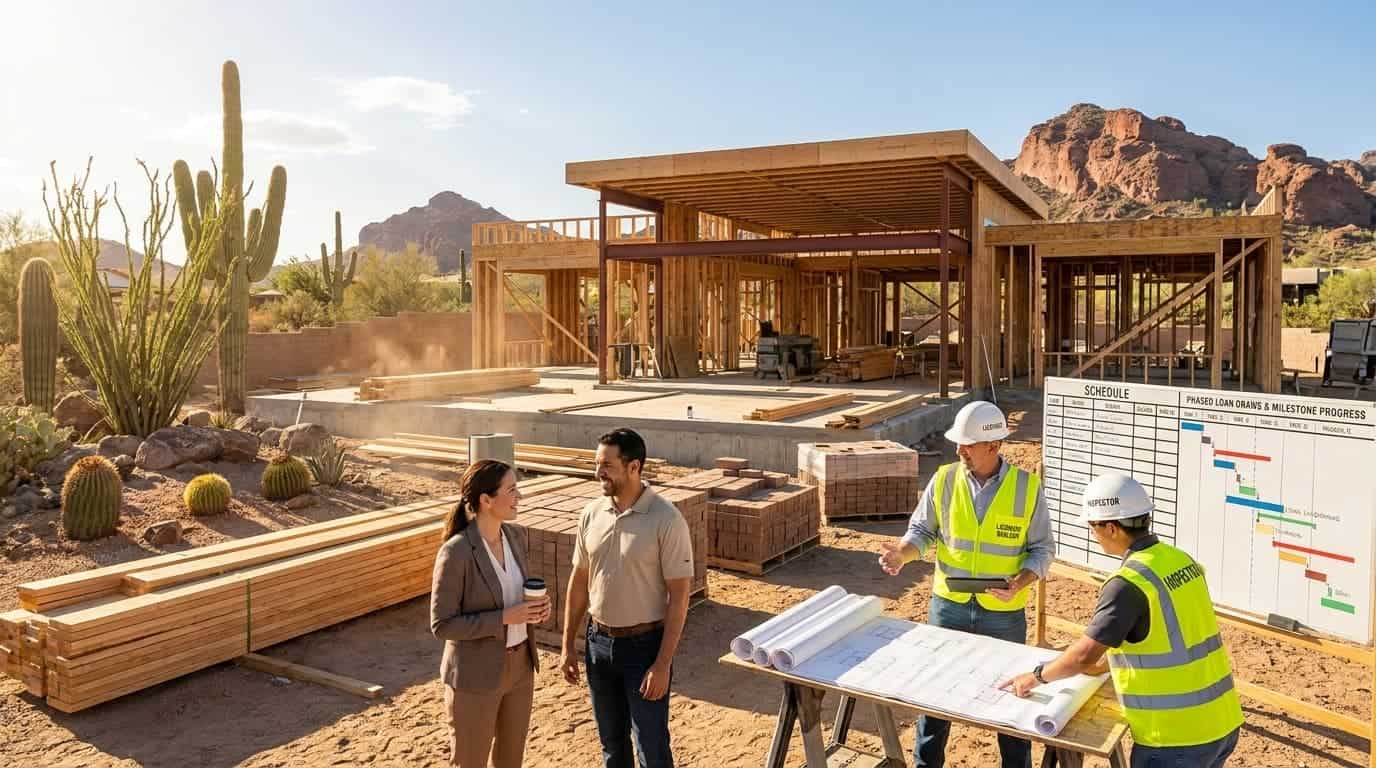
If you are planning to build your dream custom home in Phoenix, understanding construction loan basics is the first crucial step toward turning your blueprints into reality. Securing financing for a home that does not exist yet requires a completely different approach than buying a move-in-ready property. Homeowners need to know exactly how construction loans work, from initial pre-approval to the final payment draw, to ensure their project stays on budget and on schedule. Navigating this process can feel overwhelming, but at Prolific Builders, we guide Phoenix homeowners through every financing decision to ensure smooth project execution.
What Is a Construction Loan? (The Basics)
A construction loan is a short-term financing option specifically designed to cover the costs of building a residential property. Unlike a traditional mortgage that gives you a single lump sum to buy an existing house, a construction loan funds the project in stages as the work is completed. Because the home is not yet built, the lender takes on more risk, which is why these loans have unique structures, distinct approval processes, and different payment expectations.
Here are the key differences between a construction loan and a traditional mortgage:
- Phased Funding: Construction loans pay out in “draws” based on project milestones, rather than a single lump sum at closing.
- Interest-Only Payments: During the building phase, you typically only pay interest on the money that has been drawn so far, keeping your monthly payments lower while you build.
- Short-Term Timeline: Construction loans usually last 12 to 18 months, converting to or being replaced by a standard long-term mortgage once the home is finished.
- Builder Vetting: Lenders require the builder to be fully licensed, insured, and approved by the bank before they will issue the loan.
One-Time Close vs. Two-Step Construction Loans: Which Is Right for You?
When financing a custom build, you will generally choose between two primary loan structures. The right choice depends on your financial situation, your risk tolerance, and your long-term goals.
A one-time close construction loan, also known as a construction-to-permanent loan, wraps both the short-term building financing and your long-term 30-year mortgage into a single package. You close on the loan once before breaking ground. When the home is finished, the loan automatically converts to a permanent mortgage. This means you only pay closing costs once, and you can often lock in your interest rate before construction begins.
A two-step construction loan involves two entirely separate processes. First, you close on a short-term construction loan to build the house. Once the home is completed, you must apply for and close on a brand new permanent mortgage to pay off the construction debt. While this means paying closing costs twice, it can offer more flexibility if you need to shop for better long-term rates later or if your build is highly complex.
To help you decide, here is a breakdown of how the two options compare for custom home builds:
| Feature | One-Time Close | Two-Step Loan |
|---|---|---|
| Closing Costs | Paid only once, saving thousands upfront. | Paid twice, once for each separate loan. |
| Interest Rate Lock | Locked in before construction begins. | Floats until the second loan is secured. |
| Down Payment | Often lower requirements, starting around 5%. | Typically requires 20% or more upfront. |
| Flexibility | Less flexible if project costs increase significantly. | High flexibility to adjust final mortgage amount. |
| Risk Level | Lower risk, as permanent financing is guaranteed. | Higher risk if your financial situation changes. |
For most custom home clients in Phoenix, the one-time close is the preferred method because of its simplicity and cost savings. At Prolific Builders, our team frequently helps clients navigate these early choices during our initial financing consultations.
How Construction Loans Work: The Step-by-Step Process
Understanding the exact sequence of events can remove the anxiety from custom home financing. Because the lender is funding a project that is built over months, the process requires high levels of coordination between you, the bank, and your builder.
- Step 1: Pre-qualification and Credit Check. Before looking at land or drafting plans, you must get pre-approved to understand your budget. Lenders will thoroughly review your income, debts, and credit history.
- Step 2: Selecting an Approved Builder. The bank is not just approving you, they are approving the contractor. Lenders require comprehensive builder vetting, including checking licenses, insurance policies, and past project success. Prolific Builders is an approved contractor with major Phoenix lenders and handles all coordination with your chosen bank.
- Step 3: Submitting Plans and Budget. We work with you to finalize architectural plans and a detailed line-item budget. The lender uses these documents to conduct an “as-completed” appraisal, determining what the home will be worth on the day it is finished.
- Step 4: Loan Closing. Once the appraisal is approved, you sign the final paperwork, pay your down payment, and officially close the loan. Now, the dirt is ready to be moved.
- Step 5: Construction Phase and Draw Schedule. As construction begins, your lender releases funds in phases called draws. An inspector visits the site at each milestone to verify completion before releasing the next batch of funds to the builder.
- Step 6: Conversion to Permanent Mortgage. Upon final inspection and the issuance of a Certificate of Occupancy, the short-term loan is closed out. If you chose a one-time close, your loan automatically shifts into your 30-year mortgage.
Construction Loan Requirements in Arizona (2026 Edition)
Because there is no physical house to act as collateral at the beginning of the loan, qualification standards for construction financing in Arizona are generally stricter than traditional mortgages. For the 2026 lending market, banks want to see strong financial health before committing to a ground-up build.
Credit score minimums vary heavily by the type of loan you choose. For an FHA construction loan, you might be approved with a score as low as 620. However, traditional conventional construction loans typically require a minimum credit score of 680 to 700. If you are a veteran utilizing a VA construction loan, the score requirements can be more flexible depending on the lender.
Your debt-to-income ratio, which measures how much of your monthly income goes toward paying debts, must typically stay under 45 percent. Lenders will also demand rigorous income verification and a solid employment history to ensure you can afford the permanent mortgage payments once the home is finished.
Down payments are another major factor. FHA construction loans require just 3.5 percent down, while VA loans can allow for zero percent down. Conventional custom home loans generally demand between 5 percent and 20 percent down, depending on the total cost of the build. Additionally, lenders usually require you to have cash reserves in the bank to handle unexpected overages. Finally, the builder must meet strict requirements. Prolific Builders is fully licensed and insured in Arizona, seamlessly meeting all lender requirements to keep your approval process moving.
Phoenix Construction Loan Lenders & 2026 Rate Guide
Finding the right local partner is vital for a successful build. Local lenders understand the Phoenix market, municipal permit timelines, and specific Arizona building challenges much better than out-of-state mega-banks. Some of the top institutions offering construction loans in the Phoenix area include OneAZ Credit Union, National Bank of Arizona, and Arizona Financial.
For the 2026 market, interest rates on construction loans typically sit about 0.5 to 1.0 percent higher than standard 30-year mortgage rates. This slight premium reflects the added risk the lender takes during the building phase. When evaluating these local lenders, it is critical to compare their specific features.
- OneAZ Credit Union: Known for competitive rates and excellent one-time close programs for Arizona residents.
- National Bank of Arizona: Offers robust jumbo construction loans, making them a great fit for luxury high-end builds.
- Arizona Financial: Provides flexible down payment minimums and generally faster processing speeds for localized projects.
When shopping for your loan, be sure to ask the lender about their typical draw turnaround time and whether they manage inspections in-house. Prolific Builders has established relationships with top Phoenix lenders and can facilitate introductions to banks that match your specific project size and budget.
Understanding Construction Loan Draws & Disbursements
The draw process is the heartbeat of custom home financing. A draw is a staged release of funds from the bank to the builder to pay for work that has just been completed. Lenders do not give the builder all the money on day one. Instead, the total loan amount is divided into a draw schedule based on major construction milestones.
A typical draw schedule involves five to seven stages. For example, the first draw might cover lot preparation and the pouring of the concrete foundation. The second draw funds the structural framing. Subsequent draws cover the installation of the roof, plumbing, drywall, interior finishes, and finally the landscaping.
Before any money is released, the lender sends a third-party inspector to the job site. The inspector verifies that the foundation is actually poured or the drywall is fully installed. Once approved, the bank wires the funds directly to the builder. This cycle usually happens every two to four weeks.
During this entire period, you are only making interest-only payments on the funds that have actually been disbursed. If unexpected delays occur due to weather or supply chain issues, the draw simply pauses until the milestone is reached. Prolific Builders actively manages the draw process with your lender, ensuring timely funding, prompt inspector visits, and uninterrupted project momentum.
Custom Home Financing: Special Considerations for High-End Builds
Building a luxury custom home in Phoenix comes with its own set of financing rules. High-end builds often exceed conventional loan limits, requiring homeowners to secure a jumbo construction loan. In 2026, homes costing well over a million dollars will almost certainly fall into this category.
Jumbo construction loans carry stricter underwriting guidelines. Lenders often demand higher credit scores, larger cash reserves, and down payments of 20 percent or more. Because standard secondary markets do not usually buy these massive loans, you will often work with portfolio lenders. These are banks that keep the loan on their own books, which sometimes gives them more flexibility in approving unique architectural designs or premium material costs.
Custom designs also impact the appraisal process. If you are building a highly unique, modern architectural masterpiece in a neighborhood of traditional homes, the lender may struggle to find comparable properties to justify the as-completed value. Furthermore, lenders heavily scrutinize the builder for luxury projects. They want to see a rich portfolio of past high-end builds, robust financial stability, and stellar references. Prolific Builders specializes in custom homes and has extensive experience securing financing for high-end projects, ensuring the bank feels completely confident in the execution of your luxury estate.
Common Construction Loan Mistakes to Avoid
Even with careful planning, financing a ground-up build has potential pitfalls. One of the absolute biggest mistakes a homeowner can make is changing jobs, buying a new car, or opening new credit cards during the construction phase. Because the final mortgage is not fully executed until the home is finished, lenders will pull your credit one last time. A sudden drop in your credit score can cause your permanent financing to fall through at the last minute.
Underestimating project costs is another common error. If you decide to upgrade to premium hardwood floors or luxury appliances halfway through the build, the bank will not simply increase your loan amount. You must pay for those upgrades out of pocket, which is why having an emergency contingency budget is vital.
Choosing an unlicensed or inexperienced builder is a massive red flag that will stop a loan application immediately. Banks will not risk their money on an unproven contractor. Additionally, poor communication between the homeowner, the builder, and the bank can lead to missed inspections and delayed funding, bringing the job site to a halt.
Prolific Builders maintains transparent communication with lenders and keeps homeowners constantly updated on budget status, ensuring these common pitfalls are avoided entirely.
Ready to start your custom home journey in Phoenix? Navigating the world of construction financing does not have to be stressful when you have the right local partner by your side. If you have questions about budgeting for your dream home or need recommendations for the best local lenders, give our team a call today to schedule your initial consultation.
Frequently Asked Questions
What credit score do I need for a construction loan in Arizona?
For standard conventional construction loans in Arizona, most lenders require a minimum credit score of 680, though a score of 700 or above will secure you the best interest rates. If you are using an FHA construction loan, you may qualify with a score as low as 620, while VA construction loan requirements vary by the specific lending institution.
Do I pay principal during the construction phase?
No, you typically do not pay principal during the active building phase. Construction loans are structured with interest-only payments based entirely on the amount of money the lender has disbursed to the builder so far. Your full principal and interest payments will only begin after the home is completed and the loan converts to a permanent mortgage.
Can I use the land equity as my down payment?
Yes. If you already own the lot where you plan to build, most lenders will allow you to use the equity you have in that land toward your required down payment. If you own the land free and clear, its appraised value can often cover the entire down payment requirement for the construction loan.