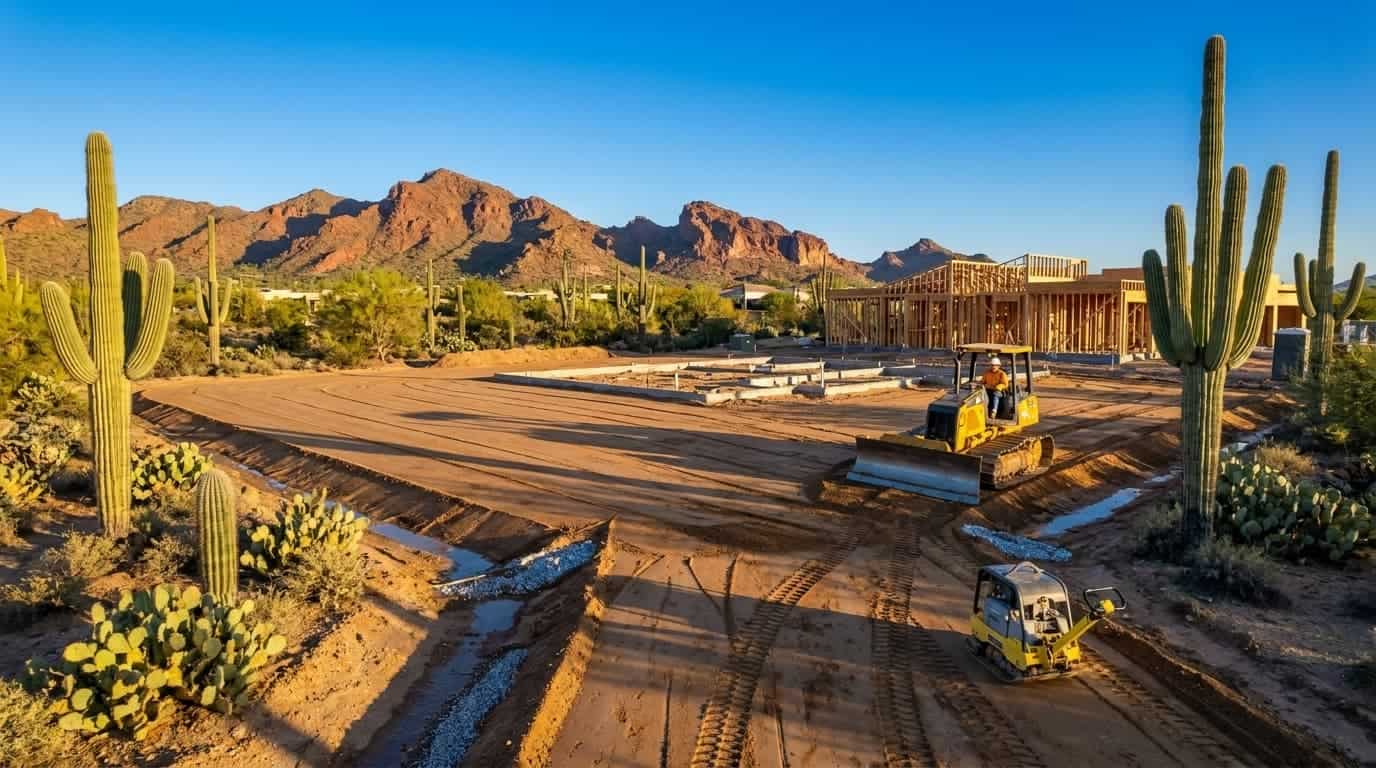
Building a custom property in Phoenix, AZ comes with immense excitement, but before the framing goes up or the foundation is poured, the most critical phase of your project must take place. Tackling the site grading new home process correctly is the ultimate defining factor in your property’s longevity. Without precise leveling and proactive drainage for new construction, your investment is entirely at the mercy of unpredictable desert elements. At Prolific Builders, we have seen firsthand how taking shortcuts during site preparation leads to devastating structural damage down the line. Proper earthwork ensures your custom build stands on solid ground, effectively shedding water during intense seasonal storms and complying with strict local building codes from day one.
Why Site Grading & Drainage Are Critical for Phoenix New Builds
The foundation of any quality construction project begins with the dirt it sits on. When you start a new build in Phoenix, site grading is not just about making the ground look flat, it is a highly engineered process designed to create a stable, load-bearing surface for your foundation. A poorly graded lot invites a host of structural problems. When soil is not properly leveled and compacted, foundation settling occurs. This uneven settling causes stress fractures in concrete slabs, drywall cracks, and misaligned door frames throughout the home.
Beyond structural support, proper grading dictates your property’s entire water management system. The primary goal of grading is to direct water away from your foundation. In the desert, this is particularly vital due to our intense monsoon seasons. When the skies open up during a summer storm, thousands of gallons of water can dump onto your property in minutes. If your lot does not have a precise slope pulling that water toward street drains or retention basins, it will pool against your concrete slab. Over time, this standing water undermines the foundation, erodes the surrounding soil, and can even cause catastrophic flooding inside the home.
Regulatory compliance is another massive factor. Local municipalities strictly enforce grading plans to ensure one property’s runoff does not flood a neighbor’s yard. Navigating these requirements smoothly requires a contractor who understands both the dirt and the law. Investing in professional grading upfront saves tens of thousands of dollars in post-construction foundation repairs, landscaping replacements, and drainage retrofits.
Top Reasons Proper Grading Matters for Your Build:
- Foundation Stability: Prevents uneven settling and severe structural cracking.
- Flood Prevention: Directs monsoon rainwater away from vulnerable entry points.
- Code Compliance: Ensures you meet strict Maricopa County and Phoenix drainage regulations.
- Long-Term Savings: Eliminates the need for expensive post-construction trenching and concrete repair.
Understanding Phoenix’s Unique Soil & Climate Challenges
Building in the Sonoran Desert presents geographical challenges that you simply will not find in other parts of the country. Phoenix soil is notorious for its difficult composition, primarily featuring caliche and hardpan. Caliche is a naturally occurring cement-like layer of calcium carbonate that binds sand, gravel, and clay together. It is incredibly difficult to excavate and severely restricts natural water absorption. If a contractor does not properly break through or grade around caliche layers, any rainwater that hits your yard will simply sit on the surface, creating massive puddles that slowly degrade your foundation.
Our climate also tricks many out-of-state builders. Phoenix’s incredibly dry weather can easily mask drainage problems for months. A yard might look perfectly fine during the fall and spring, but when the summer monsoons hit, the lack of proper slope becomes disastrously obvious. Because the baked desert soil is so dry and compacted, it behaves more like concrete than a sponge during a flash flood. The water runs off rapidly rather than soaking in, making a 100-year flood event a very real threat to low-lying properties.
Additionally, extreme temperature fluctuations cause the soil to expand and contract. This constant movement requires specialized compaction techniques during the grading phase. Builders must also adhere to specific elevation requirements, ensuring the home’s finished floor sits high enough above the adjacent street level and floodplains to stay dry during those rare, intense downpours.
Grading Methods Explained: Which Approach Is Right for Your Project?
Not all grading is created equal. Depending on the condition of your raw land, the specific flood zone of your lot, and the architectural plans of your home, different methods are required to prep the site. At Prolific Builders, our site analysis team carefully evaluates your property to determine the most effective and economical approach.
| Grading Method | Best For | The Process | Pros & Cons |
|---|---|---|---|
| Rough Grading | Initial site preparation and shaping | Cutting high areas, filling low valleys, and compacting the dirt to establish a basic elevation. | Pro: Fast and establishes the essential slope. Con: Too rough for final paving or landscaping. |
| Cut & Fill Grading | Projects requiring balanced dirt management | Moving excess soil from high spots to fill low spots on the exact same property. | Pro: Highly cost-effective by reducing dirt import/export fees. Con: May still require outside fill to meet Phoenix flood elevation codes. |
| Fine Grading | Final preparation before pouring concrete | Micro-adjusting the soil surface for precise architectural, landscaping, and foundation requirements. | Pro: Creates a perfectly precise, ready-to-build surface. Con: Time-intensive and requires highly experienced operators. |
Deciding between these methods often comes down to Phoenix’s stringent flood requirements. If your lot sits in a historical runoff path, a simple rough grade will not suffice. We may need to import tons of structural fill dirt to raise the home’s pad elevation, moving beyond a simple cut and fill strategy. Understanding these timelines and cost implications early in the design phase keeps your new construction project firmly on schedule.
The Drainage Design Process: Preventing Water Pooling & Foundation Damage
Grading and drainage go hand in hand. You cannot have one without the other. The drainage design process begins long before the heavy machinery arrives, starting with a comprehensive site analysis and detailed geotechnical reports. These reports tell us exactly what kind of soil we are dealing with and how much weight it can bear. From there, we calculate exact slope angles to dictate natural water flow patterns across the property.
A standard Phoenix drainage plan relies heavily on proactive water routing. We grade the soil to drop a minimum of six inches within the first ten feet away from the foundation. To handle the overflow from roofs and gutters, we integrate specialized drainage solutions directly into the grading plan. This often includes cutting swales, which are shallow, wide ditches naturally integrated into the landscaping to quietly funnel water toward the street. For tighter lots where swales are not an option, we prepare trenches for French drains, utilizing perforated pipes and gravel to move water safely underground.
Proper drainage design protects more than just the main house. It safeguards your driveway, walkways, and outdoor living spaces from washout and erosion. When water is allowed to pool against a concrete footing, the moisture slowly degrades the concrete and rusts the internal rebar. By strictly managing how water travels from the roof to the gutters, and down across the graded soil, we prevent the slow, silent structural settling that ruins so many homes.
Phoenix Permitting & Compliance: What You Need to Know
You cannot simply bring a bulldozer onto an empty Phoenix lot and start pushing dirt around. The regulatory environment here is strict, and operating without the proper paperwork will result in immediate stop-work orders and massive fines. Navigating the municipal red tape requires strict attention to detail and an understanding of regional environmental laws.
One of the most critical elements of a Phoenix grading project is dust control. Maricopa County enforces Rule 310, a strict air quality regulation requiring comprehensive dust mitigation during earthmoving activities. We must utilize water trucks and specific site management tactics to prevent airborne dust, which is heavily monitored by county inspectors. Furthermore, geotechnical reports are almost always required to prove that the prepared soil will adequately support the engineered foundation.
Steps to Obtain a Grading Permit in Phoenix:
- Geotechnical Analysis: Hire an engineer to test the soil and draft a formal report.
- Drafting the Civil Plans: Create detailed grading and drainage plans showing cut/fill estimates, elevations, and water retention strategies.
- Dust Control Application: File for a Maricopa County Rule 310 dust control permit for any project moving substantial amounts of dirt.
- City Plan Review: Submit all documents to the City of Phoenix Planning and Development Department for review.
- Approval and Inspections: Once approved, schedule the necessary municipal inspections at key phases during the grading process to verify compliance.
2026 Phoenix Site Grading & Drainage Cost Guide
Budgeting for site preparation is often one of the biggest question marks for homeowners planning a custom build. Costs fluctuate based on fuel prices, labor availability, and the specific complexities of your lot. For 2026, the cost of site grading and drainage installation in the greater Phoenix area varies significantly based on project scope.
For a standard single-family residential lot, basic rough and fine grading typically ranges from $5,000 to $15,000. However, if your lot sits on a steep incline, contains heavy caliche requiring rock-breaking equipment, or demands massive amounts of imported fill dirt to meet flood elevations, costs can easily scale between $20,000 and $40,000. Smaller projects, such as preparing a pad for an Accessory Dwelling Unit or detached garage, usually fall between $3,000 and $7,000.
Drainage solutions also impact the budget. Cutting simple dirt swales is highly cost-effective, while installing complex underground French drain networks and catch basins will add several thousand dollars to the final bill. While these upfront costs may seem high, the return on investment is undeniable. Spending $10,000 on proper grading today is vastly cheaper than spending $50,000 on foundation underpinning and water damage restoration five years from now.
Common Grading & Drainage Mistakes And How to Avoid Them
Even a beautifully designed custom home will fail if the dirt beneath it is neglected. Unfortunately, many inexperienced contractors make crucial errors during the site preparation phase that only become visible when it is too late. Knowing what can go wrong is the best way to ensure your build is protected.
| The Mistake | Why It Fails | How to Avoid It |
|---|---|---|
| Inadequate Foundation Slope | Failing to grade the required drop away from the house allows water to pool directly against the concrete slab, leading to severe settling. | Ensure a strict, laser-measured drop of at least 6 inches for the first 10 feet moving away from the structure. |
| Ignoring Caliche Layers | Building over hardpan without proper excavation traps water at the surface, creating muddy bogs that rot landscaping and erode footings. | Conduct thorough geotechnical testing and use heavy ripping equipment to break up restrictive soil layers before fine grading. |
| Poor Gutter Discharge Routing | Dumping roof runoff at the base of the foundation overwhelms the grading slope during heavy monsoons. | Integrate roof downspouts directly into underground PVC drainage pipes that carry water to the street or retention basin. |
| Improper Soil Compaction | Filling low spots with loose dirt without properly compacting it leads to sudden soil collapse once the weight of the house is added. | Use professional vibratory rollers and strictly follow the compaction testing guidelines outlined in the engineering report. |
To avoid these devastating errors, you must partner with a construction team that views grading not as an afterthought, but as the most critical structural component of the entire project. Prolific Builders applies rigorous quality control checks at every phase of earthwork, ensuring your property is perfectly leveled, rigorously compacted, and optimally drained before the first concrete form is ever placed.
Have questions about preparing your lot for a new custom home? Give the site prep and foundation experts at Prolific Builders a call today to discuss your project, evaluate your soil conditions, and get your build started on solid ground.
Frequently Asked Questions
Do I always need a grading permit to build a new home in Phoenix?
Yes. Any new home construction that involves moving earth, altering the natural flow of water, or changing the elevation of a property requires an approved grading and drainage plan from the local municipality. Proceeding without one violates city codes and will result in heavy fines and project shutdowns.
How long does the site grading process take?
For a standard, relatively flat residential lot with good soil conditions, rough and fine grading can take anywhere from a few days to a week. However, if the site features severe slopes, heavy caliche rock that requires breaking, or requires massive amounts of imported fill dirt, the process can easily stretch into several weeks.
What is the difference between rough grading and fine grading?
Rough grading is the heavy lifting phase where large machinery cuts down hills, fills in valleys, and establishes the general shape and elevation of the lot. Fine grading happens closer to the end of the prep phase, using precise measurements to smooth the surface perfectly for concrete pouring, driveway installation, and final landscaping.
Can I fix bad grading after the home is built?
While you can retrofit drainage solutions like French drains or surface swales after a home is built, fixing the actual grade of the soil near the foundation is incredibly difficult, disruptive, and expensive once concrete flatwork and landscaping are installed. It is vastly more cost-effective to get the grading perfect before construction begins.