What Is Universal Design in a New Build?
Building a custom home is an opportunity to create a space that serves your family for a lifetime. When planning your project, incorporating universal design features is one of the smartest decisions you can make. A universal design home is intentionally built to be accessible, safe, and comfortable for people of all ages, sizes, and physical abilities. At Prolific Builders, we believe your home should adapt to you. Unlike retrofitting an existing property, adding these elements to a new build means seamless functionality from day one.
Universal design is not about creating a hospital-like environment. It is about smart, inclusive architecture that improves daily life for everyone, from toddlers to grandparents. When planned during the architectural phase, these details blend flawlessly into your home’s aesthetic.
Benefits of Universal Design:
- Increases the long-term resale value of your custom home.
- Reduces the risk of falls and injuries for residents and guests.
- Eliminates the need for costly future renovations.
- Creates a more spacious, welcoming, and easily navigable environment.
Why Universal Design Features Make Sense for Phoenix Homeowners
Designing a custom home in Phoenix, AZ, comes with its own set of unique lifestyle considerations. The Valley is a highly sought-after destination for retirees, growing families, and multi-generational households. Incorporating smart design into your new build ensures that your home can gracefully handle whatever life throws your way.
Why it matters:
- Multigenerational Living: With more families combining households, features that accommodate elderly parents alongside young children are essential.
- Aging in Place: Planning for your own future means you can stay in the home you love without worrying about mobility challenges later on.
- Guest Accessibility: Entertaining is a staple of the Phoenix lifestyle, and inclusive design ensures visitors of all abilities feel comfortable.
- Desert Climate Comfort: Easy transitions from cool interiors to shaded outdoor living spaces make navigating the extreme summer heat much easier.
- Future-Proofing: Designing with foresight protects your investment and maximizes the functionality of your property.
The Most Valuable Universal Design Features to Include
When working with your builder, it is crucial to know which elements offer the highest return on investment in terms of livability. Here is a numbered list of the top universal design features you should prioritize in your custom home:
- Step-Free Entryways
- Wider Hallways and Doorways
- Open Floor Plans with Clear Circulation Paths
- Main-Level Primary Suite
- Curbless Showers and Accessible Bathrooms
- Lever Handles and Easy-to-Use Hardware
- Adequate Lighting and Low-Glare Design
- Slip-Resistant Flooring
- Accessible Kitchens
Step-Free Entryways
An accessible entry is the foundation of an inclusive home. Zero-threshold or minimal-step entries ensure that strollers, wheelchairs, and rolling luggage can glide right through the front door. By grading the exterior landscape to meet the porch seamlessly, we eliminate tripping hazards while maintaining exceptional curb appeal, a critical element for aging in place safely.
Wider Hallways and Doorways
Standard interior doors and narrow corridors can feel incredibly restrictive. In a universal design home, we recommend hallways that are at least 42 to 48 inches wide and doorways with a minimum clear width of 32 to 36 inches. This extra breathing room makes a home wheelchair accessible, but it also makes moving large furniture and walking side-by-side significantly easier.
Open Floor Plans with Clear Circulation Paths
A well-executed open layout eliminates visual barriers and physical bottlenecks. By merging the kitchen, dining, and living areas, you create clear, unobstructed paths of travel. This accessible home design strategy not only fosters family connection but also provides the turning radius required for mobility devices.
Main-Level Primary Suite
If you are building a two-story property, placing the primary bedroom and a full en-suite bathroom on the ground floor is a must for long-term one-story living. This ensures that if stairs ever become a hurdle, your daily routine remains entirely uninterrupted. Designing this into a new build from the start is highly cost-effective compared to later additions.
Curbless Showers and Accessible Bathrooms
Bathrooms are a primary focus for universal design features. A curbless shower, also known as a zero-threshold shower, removes the traditional step-over barrier, minimizing slip risks. An accessible bathroom should also include built-in bench seating, blocking behind the walls for future grab bars, adjustable hand-held showerheads, and comfort-height toilets.
Lever Handles and Easy-to-Use Hardware
Replacing traditional round doorknobs and twist-style faucets with lever-style handles is a simple yet powerful upgrade. Lever handles require no grip strength, allowing for simple and intuitive use by children, seniors, or anyone carrying a heavy load of groceries.
Adequate Lighting and Low-Glare Design
Visibility is a cornerstone of safe home design. As we age, our eyes require more light to see clearly and become more sensitive to glare. A well-designed electrical plan includes layered ambient and task lighting, under-cabinet illumination, and automated night lighting in hallways. Utilizing matte finishes on countertops and floors helps reduce harsh reflections from the bright Arizona sun.
Slip-Resistant Flooring
Material selection is critical for a safe flooring plan. Smooth, highly polished tiles are extremely slippery, especially when wet. We guide our clients toward textured tiles, luxury vinyl plank, or matte-finish hardwoods. These options provide superior traction, making your accessible home safer while remaining exceptionally durable and easy to maintain.
Accessible Kitchens
The kitchen is the heart of the home, and a universal design kitchen ensures everyone can participate in meal prep. Key elements of a custom home kitchen include wider aisles between islands and perimeter cabinets, varied counter heights to accommodate standing and seated tasks, pull-out pantry shelves, and appliances installed at reachable heights.
Universal Design Feature Comparison Table
To help you understand where to invest your budget during the design phase, we have broken down some of the best universal design features to maximize home accessibility.
| Feature | Primary Benefit | Best For | Priority Level |
|---|---|---|---|
| Wider Doorways & Halls | Prevents bottlenecks, allows mobility devices | Wheelchair users, moving furniture | High (Must do during framing) |
| Curbless Showers | Eliminates trip hazards in wet areas | Aging in place, modern aesthetics | High (Foundation/plumbing impact) |
| In-Wall Blocking | Allows future installation of support bars | Future-proofing the bathroom | High (Cheap now, expensive later) |
| Lever Hardware | Requires zero grip strength to operate | Arthritis, young children | Medium (Easy to swap out later) |
| Smart Lighting Systems | Voice or motion-activated visibility | Nighttime navigation, low vision | Medium (Can add smart bulbs later) |
Features to Prioritize During Construction vs. Features That Can Be Added Later
When planning a new build, it is vital to distinguish between structural requirements and cosmetic additions. Features that dictate the footprint of the home, like hallway widths, zero-step entries, and first-floor primary suites, must be finalized before the concrete is poured. Incorporating these structural elements is the true definition of future-proofing. Conversely, items like smart thermostats, lever door handles, and comfort-height toilets are simple retrofits that can be updated over time as your budget allows.
Phoenix-Specific Design Considerations for Universal Design Homes
Creating a Phoenix universal design home requires a deep understanding of our local climate. The intense heat, abundant sunshine, and outdoor-centric lifestyle dictate specific design choices that go beyond standard accessibility rules.
Phoenix-specific considerations:
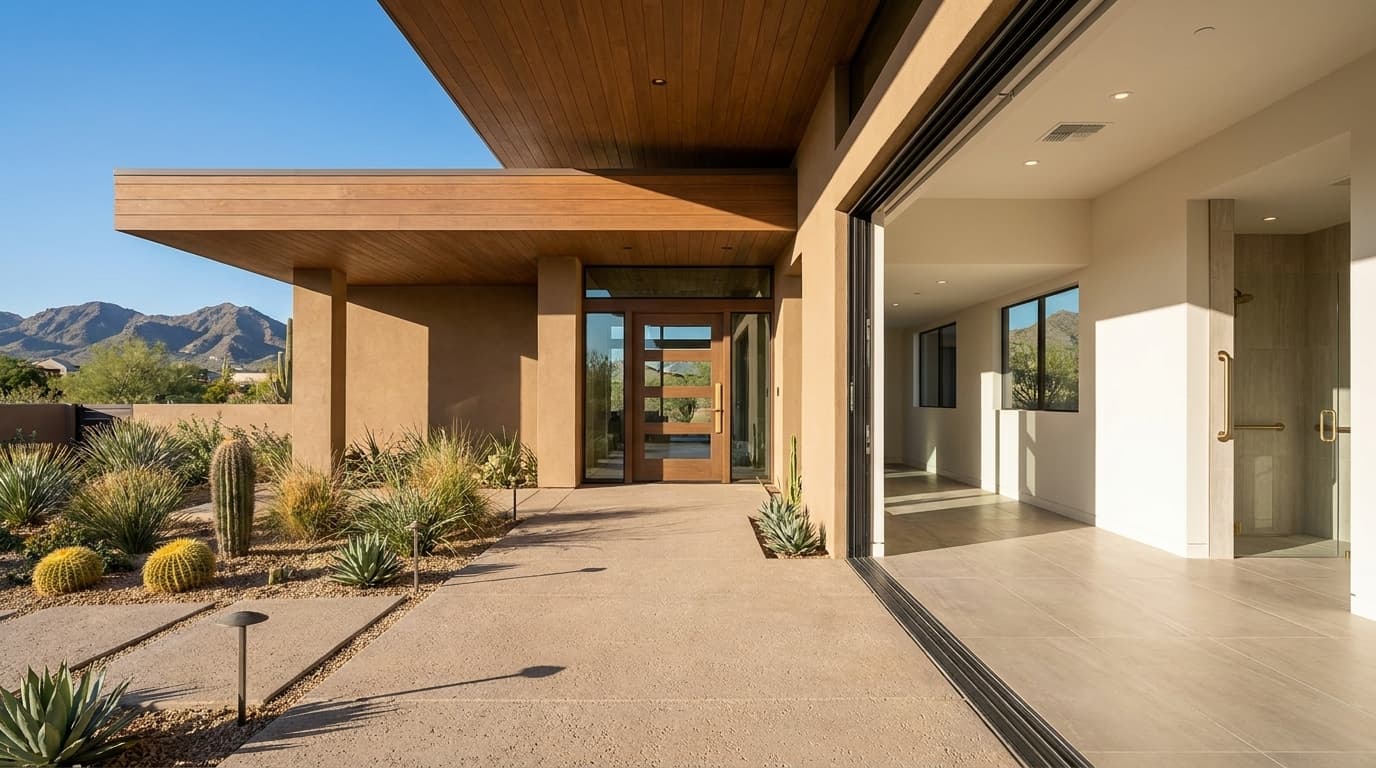
- Shaded, Accessible Entries: Deep overhangs at the front door protect residents from harsh summer sun and monsoon rains while fumbling for keys or managing a wheelchair.
- Indoor-Outdoor Transitions: Retractable glass walls are popular in Phoenix, AZ. Using flush tracks ensures a seamless, trip-free flow from the living room to the patio.
- Heat-Resistant Flooring: Opting for cool-to-the-touch, slip-resistant porcelain tiles throughout the home provides comfort and safety during the 100-plus degree summers.
- Low-Maintenance Exteriors: Utilizing native desert landscaping and durable stucco requires less physical upkeep, allowing you to enjoy your property with minimal physical strain.
Universal Design vs. Aging-in-Place Design: What’s the Difference?
While often used interchangeably, universal design features and aging in place have distinct definitions. Understanding the difference will help you articulate your goals to your design team.
| Concept | Primary Focus | Target Audience |
|---|---|---|
| Universal Design | Creating environments that are inherently accessible to all people without the need for adaptation. | Everyone, from toddlers to tall adults, pregnant women, and guests with disabilities. |
| Aging in Place | Modifying or designing a space specifically to accommodate the declining mobility and health of seniors. | Older adults who wish to remain in their own homes safely as they age. |
At Prolific Builders, we prefer the universal design approach because it provides the benefits of aging in place while enhancing the overall comfort and market appeal of the home for buyers of any demographic.
How to Plan Universal Design Features Without Making Your Home Feel Institutional
One of the biggest misconceptions about modern universal design is that it looks clinical. In reality, a well-planned custom home utilizes high-end finishes and clever architectural integration to make accessibility completely invisible.
Design tips for a cohesive, beautiful home:
- Choose designer grab bars: Modern support bars are available in matte black, brushed brass, and polished nickel to perfectly match your bathroom fixtures.
- Opt for sleek floating vanities: A wall-mounted bathroom sink looks incredibly contemporary while quietly providing the necessary knee clearance for seated use.
- Use linear shower drains: Tucking a sleek linear drain against the wall allows for a beautiful, uninterrupted run of large-format floor tile right into the shower space.
- Disguise varied counter heights: Use a beautiful butcher block drop-down baking station in the kitchen, it serves as an accessible prep area while adding visual interest to the cabinetry.
When to Talk to Your Builder About Universal Design Features
Timing is everything when constructing a custom home. To ensure you maximize functionality while keeping construction costs in check, you need to introduce these concepts to your custom builder as early as possible.
Step-by-step checklist for your new build:
- During initial floor plan design: This is the time to finalize hallway widths, staircase placements, and single-story living requirements.
- Before framing begins: Inform your builder about the need for widened doorways and the exact locations for in-wall blocking for future support bars.
- During the plumbing rough-in: Ensure the foundation and plumbing are prepped for curbless showers.
- Before fixture and finish approvals: Select your lever handles, touchless faucets, and slip-resistant flooring.
Build a Universal Design Home in Phoenix with Prolific Builders
Investing in universal design features is the ultimate way to ensure your new build serves as a comfortable, safe, and beautiful sanctuary for decades to come. By planning for wider hallways, step-free entries, and accessible bathrooms early in the process, you secure your family’s future while enhancing the immediate luxury of your property. Prolific Builders specializes in tailored, forward-thinking custom homes in Phoenix. Our team is dedicated to listening to your lifestyle needs and integrating flawless, functional design from the very first blueprint.
Have questions about designing your future custom home? Give us a call today to speak with our design team.
Frequently Asked Questions
Does universal design increase the cost of a new build?
When incorporated during the initial architectural phase, the cost impact is minimal. Widening a hallway or adding plywood blocking behind a wall costs very little during framing. The real expense comes from trying to retrofit an existing home later. Proactive planning actually saves you money in the long run.
Do universal design features lower the resale value of a home?
No, they actually increase it. Because true universal design is integrated seamlessly into the architecture, it appeals to a much broader pool of potential buyers, including young families with strollers and older couples looking for their forever home. Features like open floor plans and curbless showers are highly sought-after luxury selling points.
Can I add grab bars to my bathroom later if I don’t want them now?
Absolutely. The key is to ask your builder to install structural blocking behind the drywall during the framing stage. This ensures that if you ever need to install support bars in the future, you have a solid wood foundation to anchor them to, preventing the need to tear out tile and drywall.
What is the ideal width for a wheelchair-accessible hallway?
While the standard minimum for basic accessibility is 36 inches, we highly recommend planning for 42 to 48 inches in a custom build. This provides ample turning radius for mobility devices and creates a grander, more luxurious feel throughout the home.
Is a curbless shower difficult to maintain?
Not at all. In fact, many homeowners find zero-threshold showers easier to clean because there are no awkward corners, curbs, or tracks to scrub. By properly grading the floor to a high-quality drain, water stays contained just as well as it would in a traditional shower enclosure.