
What Actually Happens During a Phoenix Bathroom Remodel, Week by Week
Most Phoenix homeowners hire a contractor without a clear picture of what happens after the first day. They know there will be a disruption. They do not know what comes next, in what order, how long each phase takes, or when they will be asked to make decisions they have not yet considered. That knowledge gap is where most remodel surprises happen: not from bad contractors but from homeowners and contractors who are not synchronized on sequence and expectations.
This guide walks through every phase of a Phoenix bathroom remodel in sequence. The timeline assumes a full guest or master bath remodel of average scope. Smaller refreshes run two to three weeks. Luxury master baths with full gut and custom tile work run five to six weeks or more.
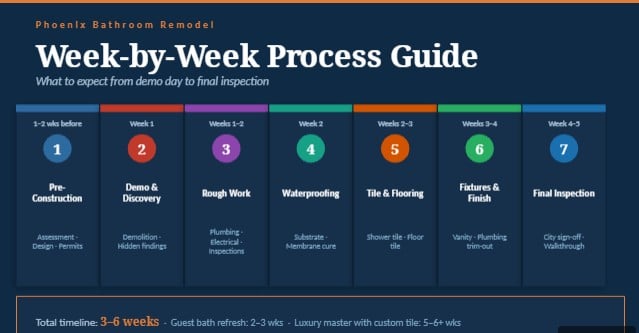
Why Understanding the Process Protects You
A homeowner who knows the sequence knows when something is out of order. Tile being set before the rough plumbing inspection has passed is a red flag: the tile may have to be removed and corrected. Fixtures arriving before the substrate has cured is another: rushing a cure reduces waterproofing integrity in Phoenix’s temperature ranges. Knowing what should happen next is the homeowner’s best protection against contractors who cut corners in sequence.
Pre-Construction: Assessment and Permits (1-2 Weeks Before Demo)
Site assessment: The licensed contractor visits, measures, photographs, and inspects the existing bathroom. Subfloor condition, plumbing access, electrical panel capacity, and ventilation adequacy are all evaluated before any scope or cost is committed to. At Prolific Builders, nothing is priced until the assessment is complete. Surprises discovered after the demo cost more than surprises caught before it.
Design and material selection: Tile, fixtures, vanity, and hardware are selected before construction begins. This step is often rushed or skipped, with selections made after demolition begins. That sequence creates change orders, delays, and the “we were picking tile while the demo crew was in our bathroom” problem that Phoenix Home Remodeling’s own content cites as the most common preventable remodel mistake.
Permit application: For any project involving plumbing relocation, electrical work, or structural changes, the City of Phoenix requires permits before work begins. A licensed general contractor handles all permit applications and fee payments. Permit review typically takes three to seven business days in Phoenix. No work that requires a permit inspection begins until the permit is in hand.
Week 1: Demolition and Discovery
Demolition: The existing bathroom is stripped: tile removed, fixtures disconnected and removed, vanity pulled, and flooring taken up. This is the most disruptive period of the project. In a typical full remodel, demo takes one to two days for a standard-size bathroom.
Discovery: Demo reveals what the walls and floor were hiding. Corroded drain lines, soft subfloor from slow moisture intrusion, and undersized electrical wiring are the three most common discoveries in Phoenix homes built before 2000. In homes from the Valley’s 1985-2005 building era, at least one of these discoveries is common enough that budgeting a 10-15% contingency is standard practice.
Any discovery that changes the scope is documented in a written change order: the specific finding, proposed solution, cost, and timeline impact. No additional work starts until the homeowner approves the change order in writing. Contractors who skip this step are the ones whose clients find extra charges on the final invoice that they did not approve.
Week 1-2: Rough Plumbing and Electrical
Rough plumbing: If drain lines are being relocated or supply lines replaced, the rough plumbing work happens now. In Phoenix homes with original galvanized supply lines, this phase often catches scale-narrowed pipe that supply line cameras confirm. New supply lines, properly sized for the new fixture layout, are roughed in before any substrate is placed over them.
Rough electrical: New circuits for GFCI outlets, exhaust fan replacement, and recessed lighting rough-in all happen at this stage. Phoenix’s 2026 building code requires GFCI protection for all bathroom outlets within six feet of a water source. Updating a bathroom that predates this code requires bringing its electrical system up to current standards.
Rough inspections: Before anything is closed in, the rough plumbing and electrical systems receive a sign-off from the city inspector. This inspection cannot be skipped on permitted work. A contractor who wants to skip inspection and cover the walls will have more problems later.
Week 2: Waterproofing and Substrate
This phase is invisible in the finished bathroom and is where most long-term failures originate. The substrate (cement board or tile backer) goes over the wall framing in wet areas. Waterproofing membrane is applied to the shower floor pan and lower walls before any tile is set.
In Phoenix’s temperature range, a waterproofing membrane requires a proper cure time before tile installation. Rushing this phase in summer, when contractors may be trying to minimize time in a hot structure, reduces the membrane’s bond strength and long-term performance. A waterproofing layer that fails within five years in a Phoenix bathroom is typically one that was rushed in cure time or applied in temperatures outside specification.
Most Phoenix remodel problems happen when the process gets out of sequence. Prolific Builders follows a documented phase-by-phase sequence with written change orders at every discovery.
Get My Free Bathroom Remodel Quote or call (480) 972-3000
[DEVELOPER: Apply call tracking tag to phone number.]
Weeks 2-3: Tile and Flooring
Shower tile: Large-format tile in Phoenix showers requires back-buttering on both the tile and the substrate for proper coverage: a step that takes longer but prevents hollow spots that crack. Epoxy grout (not standard cement grout) should be used in Phoenix shower applications to resist the mineral penetration from the Valley’s 200-300+ ppm hard water. A contractor using standard cement grout in a Phoenix shower is using a material that will develop hard-water stains within five years.
Floor tile: The bathroom floor tile goes in after the shower is installed. Transitions, thresholds, and any heated floor elements are installed at this stage.
Tile inspection point: Before grout is applied, check that the tile is plumb, level, and properly seated. Any hollow sound when tapping tile (use your knuckle in a grid pattern) indicates inadequate mortar coverage. This is the last practical point to address coverage issues before grouting locks them in.
Weeks 3-4: Fixtures, Vanity, and Finish Work
Plumbing trim-out: Shower valve, faucets, and toilet are installed after tile work is complete. Supply line connections are made and pressure-tested. The plumber inspects every connection before the walls are considered closed.
Vanity and countertop: The vanity cabinet is set, the countertop is installed, and undermount sinks are installed before the countertop is sealed. In Phoenix, quartz countertops are the practical choice over natural stone in bathrooms: they are non-porous, require no sealing, and resist the hard-water staining that necessitates periodic sealing on granite or marble.
Electrical finish: GFCI outlets, lighting fixtures, exhaust fan, and any heated floor thermostat are installed and wired at trim-out. The exhaust fan CFM rating should match the bathroom’s cubic footage: undersized fans are the most common cause of recurring mold in Phoenix bathroom remodels.
Final paint and caulk: Walls are painted after tile and fixtures are set. Caulk at all transitions (tile-to-wall, tile-to-fixture, shower curb) is the last line of defense against water intrusion. Silicone caulk outperforms latex in wet applications and should be used at every wet-area transition.
Week 4-5: Final Inspection and Walkthrough
Final city inspection: The city inspector signs off on the completed permitted work. No project that requires permits is considered complete without this inspection. The inspection certificate becomes part of the home’s permit history and is material to future title searches and homeowner’s insurance claims.
Client walkthrough: The contractor walks through every item in the original scope, confirms completion, and addresses any punch-list items. No final payment is released until the walkthrough is complete and punch-list items are resolved. At Prolific Builders, the one-year labor warranty starts from the date of the final walkthrough.
What Separates a Quality Phoenix Bathroom Remodel from a Poor One
Four specific practices distinguish quality execution: a waterproofing membrane that gets proper cure time before tile is installed over it, epoxy grout specified for Phoenix’s hard-water environment, back-buttered tile for full mortar coverage in wet areas, and written change orders for every scope discovery before additional work begins. None of these are visible in the finished bathroom. All of them determine how long the finished bathroom performs.

[DEVELOPER: Style this block as a visually distinct pull quote.]“Bathroom renovation turned out even better than we imagined. Easy to work with, kept everything on schedule. Quality of the workmanship really shows.”
: Cindy Coombs, Phoenix homeowner ⭐⭐⭐⭐⭐ via Google Reviews
Get My Free Bathroom Remodel Quote
Arizona ROC #356246. BuildZoom Score 100. No-obligation estimate.
Frequently Asked Questions
How long does a Phoenix bathroom remodel take?
Most full bathroom remodels in Phoenix run three to five weeks from demolition through final walkthrough. Add one to two weeks of pre-construction for assessment, design, and permit applications. Guest bath refreshes without layout changes run two to three weeks. Full luxury master baths with custom tilework and layout changes run five to six weeks or more. Timeline is committed to the line-item proposal before any work begins.
Do I need to move out during a Phoenix bathroom remodel?
For a single-bathroom home, arranging temporary accommodation is strongly recommended, at a minimum for the demolition and rough work phases (days one through five). For homes with a second bathroom, the remodel typically proceeds with the household in residence. The contractor should confirm which days are the highest-disruption days before work starts so you can plan accordingly.
What causes Phoenix bathroom remodels to go over the quoted timeline?
Three causes account for most delays: scope discoveries after demo (corroded plumbing, subfloor damage) that were not in the original estimate, material lead times for special-order tile or fixtures, and re-work from failed inspections. A contractor who completes a thorough pre-demo assessment, uses in-stock or confirmed-available materials, and sequences rough work correctly rarely hits avoidable delays.
What permits are required for a Phoenix bathroom remodel?
Plumbing relocations, new electrical circuits, structural changes, and HVAC modifications all require City of Phoenix permits. A standard cosmetic refresh (no layout changes, no plumbing relocation, no electrical work) may not require permits. Your licensed contractor determines permit requirements during the pre-construction assessment and includes fees in the proposal. The permit record protects your home’s title and insurance coverage.
What is the best way to stay informed during a Phoenix bathroom remodel?
Agree on a communication cadence before work starts: either a daily check-in text or a weekly site walkthrough, depending on your preference. Insist on written documentation for every change order before work continues. Know the scheduled phases so you recognize when something is out of sequence. The homeowners who end up with the best outcomes are the ones who are informed, not micromanaging, but tracking phase completion against the agreed timeline.
About Prolific Builders
Prolific Builders is a Phoenix-based General Contractor holding an Arizona ROC License #356246 (dual commercial and residential classification) with a BuildZoom Score of 100. Over a decade of operation built entirely on word-of-mouth referrals, 5.0 Google rating, 15+ reviews. Services include bathroom remodeling across Phoenix and the surrounding Valley. 875 Estrella Pkwy, Goodyear, AZ 85338. (480) 972-3000. Mon-Fri 9 am-5 pm.
[OWNER ACTION: Add full name and headshot.]